
Upper Full Denture with Metal Mesh — Reinforced Removable Prosthesis for Maxillary Edentulism
Oct 21, 2026
Meta Description
Professional dental knowledge about upper full denture with metal mesh: principle, clinical strengths, indications‑contraindications and common Q&A for clinicians and dental technicians.
Industry Knowledge Article
What Is an Upper Full Denture with Metal Mesh
An upper full denture with metal‑mesh reinforcement is a classic removable complete denture for patients with a fully edentulous maxilla.
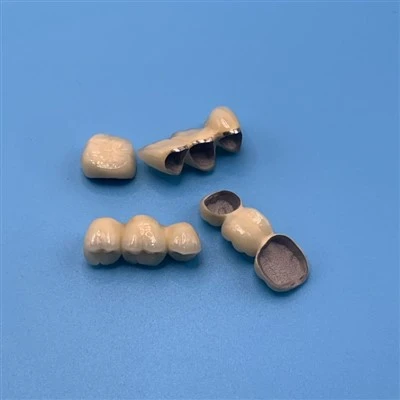
Unlike conventional full acrylic upper dentures, a thin cast cobalt‑chromium metal mesh is embedded as an internal reinforcing skeleton inside the acrylic resin base. The mesh is entirely encapsulated by denture resin and never exposed to oral mucosa. Its core purpose is to overcome the inherent shortcoming of pure acrylic bases: easy bending and fracture under chewing stress.
This is a well‑established prosthetic solution, frequently selected in lab‑to‑lab outsourcing for challenging edentulous cases.
Core Clinical Advantages
Markedly enhanced fracture resistance The embedded metal mesh reinforces the acrylic substrate, effectively resisting flexural stress. It is ideal for patients with powerful masticatory force and a history of repeated denture breakage.
Preserves mucosal comfort and peripheral seal Fully covered by resin, the mesh does not contact gingival or palatal tissues. The peripheral border seal and tissue adaptation of the complete denture remain intact.
Minimizes long‑term base deformation The metal framework restricts resin creep and deformation during service life, helping the denture maintain stable fit over time.
Better patient tolerance compared to full‑metal base Lighter than a solid full‑metal palatal base, avoiding the excessive weight and thickness that some patients cannot adapt to.
Supports both traditional and digital workflows Manufacturable from physical impressions or intra‑oral scan datasets, with full customization of artificial tooth shades.
Clinical Indications & Contraindications
Indications
Complete maxillary edentulism requiring removable full‑denture rehabilitation
Patients with high bite force and recurring fracture of ordinary acrylic full dentures
Cases where a full‑metal base is too heavy for patient acceptance
Clinics and laboratories seeking reinforced removable denture outsourcing options
Contraindications
Confirmed allergy to cobalt‑chromium base‑metal alloys
Severe palatal mucosal hypersensitivity; resin‑only or solid metal‑base alternatives should be evaluated
Practical Q&A for Clinicians & Technicians
Q1: Can patients see or feel the metal mesh in the mouth?
A1: No. The metal mesh is fully buried within acrylic resin. Only resin base and artificial teeth interact with oral tissues.
Q2: Which alloy is generally used for the reinforcing mesh?
A2: Cobalt‑chromium alloy is the industry standard for denture metal mesh reinforcement.
Q3: Metal‑mesh denture versus full‑metal base denture, what is the key difference?
A3: Metal‑mesh denture: partial internal reinforcement inside resin, lighter weight, moderate rigidity. Full‑metal base denture: the entire palatal plate is metal; maximum strength but heavier and more costly.
Q4: Can the metal‑mesh upper full denture be paired with a lower removable prosthesis?
A4: Yes. It can be combined with a lower complete denture or partial removable denture following your prescription.
Q5: What points should labs note when outsourcing this case?
A5: Clear information about occlusal scheme, tooth selection and shade is required. Complex anatomical conditions will extend production cycles. Standard turnaround: 2-3 working days; complex cases: 3-4 working days before shipment.