
Digitalization, 3D‑Printing And AI‑Driven Design Become Main Trends Of Global Dental‑Prosthetics Industry, Share Of Conventionally Hand‑Made Dentures Keeps Declining
Oct 19, 2026
The global dental‑restoration industry is experiencing revolutionary transformation in production modes. Digital workflows, 3D‑printing technology and AI‑powered design have turned into core development trends, while market share of traditional hand‑crafted processes such as manual wax‑pattern fabrication, plaster‑model application and manual porcelain build‑up keeps decreasing.
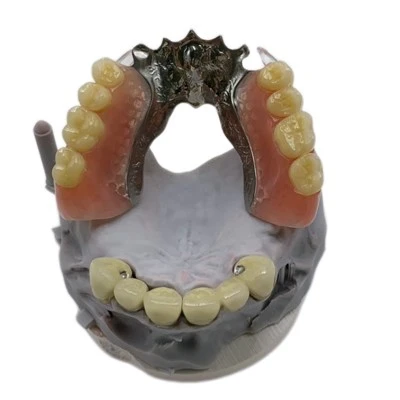
Conventional denture manufacturing heavily relies on technicians' personal experience. It covers lengthy procedures including impression‑taking, plaster‑model pouring, wax‑pattern making, casting, polishing and porcelain application. Production cycles are long, manual errors are common, and finished‑product quality fluctuates greatly subject to technicians' proficiency. Digital workflows adopt intraoral scanners to collect oral data, replace physical plaster models with digital files. Digital files can be remotely transmitted, stored in cloud platforms and revised repeatedly, breaking geographical barriers, which perfectly fits cross‑border dental‑outsourcing business.
Application scope of 3D printing in dentistry keeps expanding, ranging from resin temporary crowns, removable‑denture resin bases and model printing to metal frameworks and sintered zirconia blanks. The technology greatly simplifies manufacturing procedures of complex restorations, improves forming precision of frameworks and temporary prostheses, and shortens delivery cycles. It is widely applied in removable dentures and implant‑supported temporary restorations. As medical‑device regulations such as EU MDR gradually complete certification requirements for 3D‑printed dental products, 3D‑printed dentures gain larger market penetration in Europe and America.
AI‑design tools further unlock technicians' productivity. Currently, AI can finish repetitive work such as automatic tooth arrangement, preliminary bridge‑form generation, occlusal adjustment and margin‑line recognition. Design work that used to take hours can be finished within minutes. Technicians only need to fine‑tune aesthetics and occlusion for AI‑generated proposals, lowering skill‑learning barriers and boosting production capacity. It delivers remarkable effects for preliminary design of complex cases such as All‑on‑4 / All‑on‑6 full‑arch bridges and multi‑unit fixed bridges.
Digital closed‑loop workflows are formed via the combination of the three technologies: oral‑scan data collection → AI preliminary design → 3D‑printing or CAD/CAM milling → post‑processing, polishing and porcelain application. Integrated digital solutions show prominent advantages in precision, product consistency and turnaround time.
Accordingly, the proportion of purely hand‑fabricated dentures drops year by year. Manual techniques are mostly reserved for fine aesthetic modification and manual porcelain build‑up for special complex cases. The industry's talent structure is transforming: market demand for technicians skilled in digital design and 3D‑printing operation keeps rising, while purely manual‑skilled technicians face transformation pressure.
Across the globe, clinics and labs in Europe, America and the Middle East prefer remote outsourcing based on digital scans. Transboundary transmission of digital files plus international express delivery of finished prostheses has become industry norm. For Chinese dental labs targeting overseas markets, building complete digital production lines and introducing AI‑design and 3D‑printing equipment are basic thresholds to satisfy overseas clients' demands, as well as core competitive edges to distinguish from small‑scale traditional processing factories.