
Product Trends: Orders For Zirconia Full‑Arch Bridges, PFM Bridges With Gum Ceramic And One‑Piece 3D‑Printed Removable Dentures Are Rising Rapidly
Oct 20, 2026
Noticeable changes have taken place in the product mix of the global dental‑prosthetics market, with continuously growing demand for high‑end restorations. Three categories including zirconia full‑arch bridges, PFM bridges with gum ceramic and one‑piece 3D‑printed removable dentures enjoy remarkable order growth, and have become core growth product lines for dental labs worldwide.
Zirconia full‑arch bridges, especially monolithic zirconia All‑on‑4 / All‑on‑6 implant‑supported full‑arch bridges, serve as premium metal‑free solutions for full‑mouth rehabilitation. Milled from single zirconia blanks, they deliver excellent biocompatibility without risks such as metal allergy or grey gingival discolouration. For patients with severe alveolar‑bone resorption, gum ceramic can be applied on bridge surfaces to simulate missing gingival tissues, balancing masticatory function and aesthetic outcomes. Driven by ageing populations in Europe, America and the Middle East, more edentulous patients choose fixed implant‑supported restorations, pushing growth of cross‑border outsourcing orders for such products.
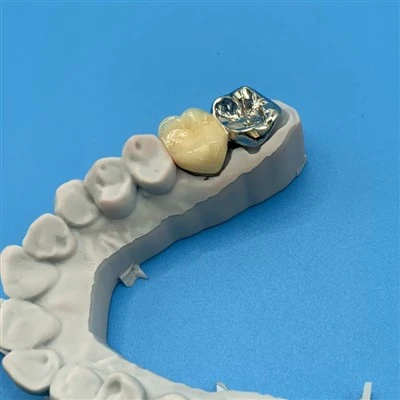
PFM bridges with gum ceramic are mostly used for aesthetic‑zone multi‑tooth‑loss cases accompanied by bone resorption and gingival recession. Conventional PFM bridges only restore tooth morphology, while additional gum ceramic compensates alveolar‑ridge defects and eliminates unsightly black triangles under pontics to achieve natural smile outcomes. Compared with full‑zirconia restorations, PFM bridges with gum ceramic feature friendlier costs and stable mechanical strength. They maintain steady demand for clinical scenarios requiring aesthetics with limited budgets, and count as frequently‑outsourced complex cases for overseas clinics.
One‑piece 3D‑printed removable dentures represent an emerging popular product in the removable‑restoration track. Traditional removable dentures require separate fabrication of resin bases and artificial teeth, together with multiple bonding and polishing steps, bringing long production cycles and bonding‑failure risks. One‑piece 3D‑printing technology can form bases and artificial teeth in a single process, greatly cutting manufacturing steps, shortening lead time and improving overall fitting accuracy of dentures. As relevant resin materials successively obtain EU MDR, ISO and other medical‑device certifications, acceptance for 3D‑printed removable dentures rises rapidly in European and North‑American markets, with growing orders year‑on‑year.
Overall, market demand is shifting from simple single crowns and ordinary fixed bridges toward high‑value‑added products such as aesthetic restorations, full‑mouth implant rehabilitation and digitally manufactured removable dentures. For Chinese dental‑outsourcing labs targeting overseas business, mastering digital design, forming and surface‑treatment techniques for the above three product lines is critical to seize overseas market dividends and lift profit margins. Meanwhile, enterprises should keep track of medical‑device regulations in various countries, ensure materials, techniques and technical documents meet import‑country declaration requirements, and avoid certification and customs‑clearance risks.