
VITA Of Germany Expands Multi‑Color Disc Indication For Implant‑Supported Fixed Prostheses
Oct 26, 2026
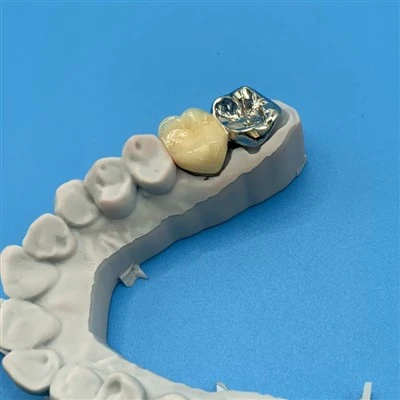
Bad Säckingen, Germany, April 27 - VITA Zahnfabrik, the renowned German dental material manufacturer, has officially expanded the clinical indication of its VITA VIONIC DENT DISC multiColor polychromatic milling blank, granting approval for CAD/CAM fabrication of implant‑supported fixed restorations. The upgrade enables technicians to mill anatomically complete, gradient‑shaded tooth units directly onto prefabricated substructures made from titanium, cobalt‑chromium, zirconia and PEEK, marking a major advance for streamlined, monolithic esthetic implant workflowsVITA Zahnf....
The VIONIC DENT DISC multiColor is built on VITA's proven MRP (Microfiller Reinforced Polymer Matrix) highly cross‑linked composite, the same material platform used for VITA's premium preformed prosthetic teeth. Unlike single‑colour composite discs, this blank features an integrated natural tooth gradient from cervical to incisal, pre‑calibrated to align with the classic VITA shade system, including the full A–D range plus bleach shades. Prior to this update, the multi‑color disc was primarily validated for removable complete and partial dentures; this indication extension unlocks its use for fixed implant bridges, screw‑retained full‑arch implant frameworks and hybrid prosthetic superstructures.
For dental laboratories, the core value lies in labour reduction. The conventional route for implant fixed cases requires technicians to select individual prefabricated denture teeth, then manually grind, adapt, reline and bond each unit to the metal, zirconia or PEEK framework. This manual fitting process is extremely labour‑intensive, prone to inconsistent marginal gaps, uneven bonding layers, air inclusions and mismatched cervical‑incisal transitions. With the upgraded VITA workflow, the full tooth morphology is designed digitally and milled as one continuous component that seats precisely to the underlying substructure. It eliminates hours of hand adaptation, contouring and layering work, while delivering a predictable, bubble‑free composite surface with factory‑controlled shade graduationhs.vita-za....
VITA positions this solution around the concept of integrated esthetic restoration. The built‑in colour gradient replicates the natural translucency of enamel, the warmer dentin zone and subtle cervical pigmentation without heavy external staining. When paired with titanium or CoCr frameworks, it creates a durable, low‑wear veneering alternative to traditional porcelain; when used on zirconia or PEEK substructures, it offers a more forgiving, shock‑absorbent occlusal surface with reduced chipping risk compared to ceramic layering. The material retains good wear resistance suitable for long‑term occlusal function, while its composite nature allows for simple chairside repair and touch‑up, a practical advantage for implant hybrid cases.
The expanded indication addresses a clear pain point in high‑volume digital dental labs. Many OEM and specialty implant labs now run parallel CAD/CAM lines for framework milling, yet tooth superstructure fabrication has remained one of the last heavily manual stages in implant fixed workflows. This disc allows labs to keep the entire design and milling sequence within digital software ecosystems such as 3Shape and Exocad, unifying framework design, tooth anatomy and occlusal scheme in one digital file. The milled tooth elements are then bonded to the substructure using the matching VITA VIONIC BOND adhesive system, which is formulated specifically to maintain stable adhesion across all four approved framework substrates: titanium, cobalt‑chromium, zirconia and PEEK.
That said, VITA's technical guidance outlines important workflow boundaries. The multi‑color composite is not a replacement for monolithic zirconia crowns or traditional porcelain‑fused‑to‑metal restorations for every clinical scenario. It is best suited for hybrid full‑arch cases, screw‑retained implant bridges and rehabilitations where the clinician prioritizes natural layered tooth esthetics, lower milling time and simplified lab processing. Laboratories also need to adhere to recommended milling parameters, surface preparation protocols and bonding steps, as poor pretreatment of the framework surface can compromise bond strength and lead to delamination under occlusal load.
From a broader industry perspective, this release reflects a continuing shift: prosthetic composite discs are evolving from "denture teeth only" materials into versatile veneering media for fixed implant reconstructions. As clinics push for faster turnaround and more consistent, natural smiles on implant patients, the ability to mill pre‑gradient tooth anatomy directly onto any common implant framework becomes a strong differentiator for commercial dental labs. For international OEM manufacturers serving European and North American markets, the VITA upgrade offers a standardized, brand‑backed option to cut technician bench time while delivering premium multi‑tonal tooth esthetics on implant fixed cases.
In summary, this April indication expansion transforms VITA VIONIC DENT DISC multiColor from a removable‑prosthesis staple into a flexible digital superstructure material for implant fixed restorations. It trades laborious manual tooth adaptation for one‑step CAD/CAM milling, bringing integrated natural colour gradation, predictable fit and simplified production to hybrid implant rehabilitation.