
Rising Overseas Outsourcing Among US General Dentists
Oct 27, 2026
A recent industry survey tracks a clear upward shift in lab outsourcing behaviour across general dental practices in the United States. The share of restorative cases sent externally to dental laboratories by US general practitioners climbed from 51% in 2023 to 58% in 2025, reflecting structural pressure reshaping the country's removable prosthetics supply chain.
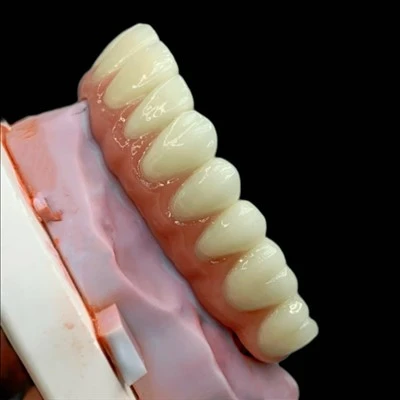
The core driver behind this steady increase is a severe, long-running shortage of skilled dental technicians within the US domestic market. Training pipelines for qualified prosthodontic bench technicians have failed to keep pace with case demand, especially for labour-heavy removable workflows. Complex complete dentures and conventional acrylic partial frameworks, which demand extensive hand-waxing, casting, packing, finishing and occlusion adjustment, have become the fastest-growing category of work routed to high-value, cost-competitive overseas production facilities. Unlike standardized monolithic zirconia crowns that fit well within domestic digital milling lines, traditional acrylic partials and complex removable prostheses remain heavily technician-dependent and are disproportionately affected by local staffing limits.
Feedback collected from US dental practices highlights a consistent pain point with domestic US labs: high pricing paired with extended turnaround windows. Even so, clinics maintain non-negotiable performance expectations for outsourced cases. While many dentists accept overseas partners for cost and capacity relief, they continue to place strict requirements on occlusal accuracy, marginal adaptation, shade fidelity and responsive remake support. This creates a nuanced commercial dynamic: price and lead-time savings are important, but reliable after-sales service, clear remake policies and predictable clinical fit are the decisive criteria for long-term lab partnerships.
The survey also reveals a growing segmentation in outsourcing strategy. Many practices adopt a hybrid model: straightforward, time-sensitive or high-aesthetic anterior work stays with local domestic labs for same-time-zone communication and fast revisions, while high-volume, labour-intensive removable cases are allocated to offshore factories with robust digital QC protocols. Digital file exchange via intraoral scans has lowered many historical barriers for cross-border collaboration, enabling overseas labs to receive prescriptions, scan data and esthetic notes remotely without physical impression shipment. Even with digital workflows, however, communication gaps, shipping delays and regulatory compliance remain recurring risk points that clinics carefully evaluate before scaling offshore volume.
For international dental OEM labs serving the North American market, this trend carries meaningful commercial implications. The rising outsourcing rate signals sustained demand capacity, yet it also raises the service bar. Winning and retaining US general dentist accounts no longer depends only on competitive pricing. Labs must demonstrate consistent occlusion control, transparent quality checks, well-defined remake terms, stable logistics and clear English-language technical communication to match the clinical reliability US practices expect.
Industry analysts note that this trend is unlikely to reverse in the short term, given the slow rate at which new certified dental technicians enter the US workforce. As the gap between domestic production capacity and removable prosthetic demand continues to widen, overseas manufacturing partners with disciplined digital workflows and strong clinical support frameworks are positioned to capture an expanding share of the US removable denture market.