
Removable Metal Framework With Denture
Oct 30, 2026
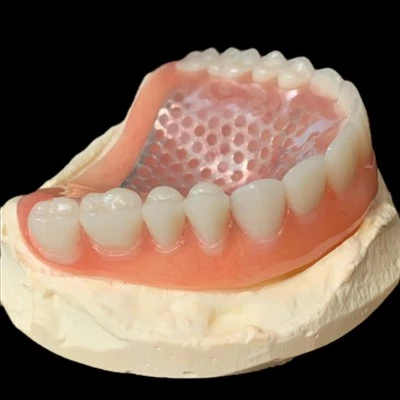
Removable metal framework partial denture (Metal RPD), assembled with cobalt-chrome or titanium metal framework, acrylic base and denture teeth, is the gold standard rehabilitation option for extensive edentulous cases, including Kennedy Class I, II, III and IV. It maintains steady global demand and cannot be fully replaced by fully printed dentures.
The metal framework acts as the rigid core of the prosthesis. Clasps, rests and major connectors distribute occlusal force evenly over abutment teeth and alveolar ridge. Acrylic resin and artificial teeth are arranged on the framework. Compared with full acrylic flippers or partial dentures, metal frameworks can be fabricated much thinner without losing rigidity.
Main Materials
Cobalt-chrome alloy (Co-Cr): The dominant material, around 72% market share. High strength, low cost, suitable for most routine cases.
Titanium: Lighter weight and superior biocompatibility, reserved for patients with metal allergy.
Key Advantages over Full Acrylic Partial Dentures
Slim design with less bulk, less foreign-body sensation and better stability during mastication.
Optimized force distribution, protecting remaining natural teeth, especially for free-end saddle cases (Kennedy I & II).
Dimensional stability. The metal frame will not warp with time. It is repairable; we can replace denture teeth or rebase the acrylic part without remaking the whole prosthesis.
Better thermal conductivity and more space for saliva flow, lowering the risk of denture stomatitis.
Limitation: Visible metal clasps compromise esthetics in anterior zones. Cobalt-chrome alloy is not suitable for allergic patients.
Global Market Trend
In North America, implants and digital dentures are popular, yet metal framework RPDs remain the first choice for elderly patients or patients with budget/insurance limitations. High local lab costs push many clinics to outsource these cases to Chinese dental labs. Two manufacturing workflows coexist: conventional casting and SLM 3D printing. Printed frameworks deliver superior passive fit with fewer adjustments, while cast frameworks are easier for in-clasp modification and repairs, preferred by many experienced clinicians. In West & Central Africa such as Cameroon, implant treatment is rarely accessible, so Co-Cr metal partials are the primary solution for multiple missing teeth.
Clinical Tips for Scanning
Complete, clear occlusal data, undercut and margin information are essential. For free-end cases or when the opposing arch also has heavy tooth loss, minor chairside adjustment after delivery is usually unavoidable. We customize clasp design (Akers, T-clasp, I-clasp) and survey path according to your prescription.
Our lab fabricates both cast and SLM printed CoCr / Titanium RPD frameworks. We accept digital scans from all major intraoral scanner platforms. Feel free to submit your complex Kennedy-class cases for evaluation.