
Zirconia Onlay
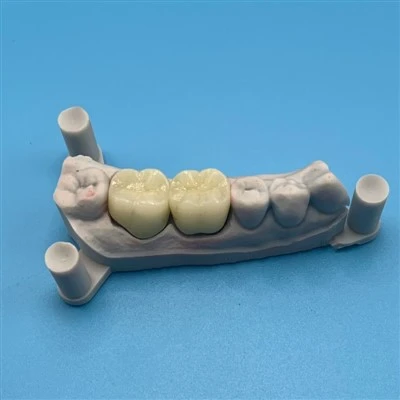
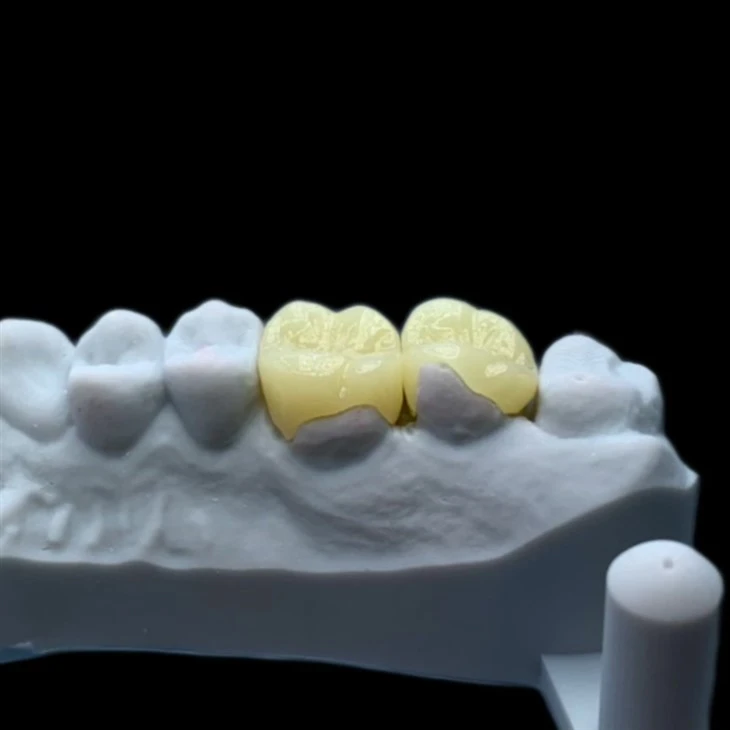
Zirconia onlay is a popular conservative all-ceramic posterior restoration widely used in modern restorative dentistry. Compared with full crowns, it preserves more natural tooth structure while protecting weakened cusps from fracture. As a digital CAD/CAM monolithic restoration, it is milled from high-strength multilayer zirconia blocks, bonded adhesively onto the prepared tooth. It covers one or more tooth cusps, different from an inlay which only fills the intra-cuspal cavity without covering any cusp. Zirconia onlay balances outstanding mechanical strength, marginal fit and natural esthetics for high-load posterior regions.
Description
What is a Zirconia Onlay?
Zirconia onlay is an adhesive partial-coverage ceramic restoration fabricated from solid zirconia ceramic. It is indicated when tooth damage extends beyond the occlusal cavity and involves one or more weakened cusps, but the remaining tooth tissue is still adequate and a full crown is not necessary.
Inlay: only fills the cavity, NO cusp coverage
Onlay: fills cavity + covers one or multiple cusps
Overlay: covers all cusps of the tooth (full occlusal coverage variant of onlay) All our zirconia onlays are digitally designed and milled via 3Shape / Medit / Shining3D workflow, with precise marginal adaptation and customizable shade matching (A1/A2/A3/A3.5/A4, multilayer gradient zirconia available).
Key Benefits of Zirconia Onlay
Superior fracture resistance Monolithic zirconia delivers high flexural strength (>1000MPa), far stronger than lithium disilicate / composite resin. It handles heavy masticatory force and is the top pick for bruxism patients (night grinders).
Minimally invasive, tooth-preserving Far less tooth reduction than full crowns. Keep more healthy enamel and dentin; conservative preparation helps maintain long-term tooth vitality.
Excellent biocompatibility Metal-free, non-toxic, low plaque accumulation, gentle to gingiva, no dark gum line, suitable for patients with metal allergy.
Stable esthetics & stain resistance Multilayer translucent zirconia mimics natural enamel light transmission. Resistant to coffee, tea, tobacco discoloration, long-term color stability.
Precise marginal seal & low secondary caries risk CAD/CAM milling ensures tight margin fit. Proper adhesive bonding reduces microleakage and recurrent decay risk.
Durable long-term service High wear resistance, predictable clinical longevity for molar and premolar heavy-bite areas.
Indications
✅ Moderate to large Class II carious lesions on premolars / molars, with weakened or fractured cusps
✅ Root canal treated posterior teeth (endodontic teeth), where cusps are thin and prone to cracking
✅ Bruxism / parafunctional habit patients (night grinding, heavy occlusal force)
✅ Old large composite fillings failing, with remaining tooth structure enough to avoid full crown
✅ Cases where inlay cannot support occlusal load, but full crown preparation is over-treatment
✅ Metal-free restoration request, aesthetic demand for posterior zone
❌ Not recommended: severely destructed tooth with insufficient remaining tooth wall; poor bonding substrate; uncontrolled heavy occlusal trauma without occlusal adjustment.
Frequently Asked Questions
Q1: Zirconia Onlay vs Emax Onlay, which one to choose?
A: Zirconia onlay = higher strength, priority for bruxism, molars, heavy bite. Emax (lithium disilicate) = better translucency and bonding, preferred for premolars with high aesthetic demand and normal occlusion.
Q2: How long does a zirconia onlay last?
A: With proper occlusal adjustment, good oral hygiene and regular check-ups, well-fabricated monolithic zirconia onlays commonly serve 10+ years. Longevity depends on remaining tooth structure and patient bruxism status.
Q3: Can zirconia onlay be used for front teeth?
A: Generally not the first choice. Anterior restorations usually select high-translucent lithium disilicate. Zirconia onlay is mainly a posterior restoration for strength priority.
Q4: What scan data do you accept for ordering zirconia onlay?
A: We accept 3Shape, Medit Link, Shining 3D, DEXIS IS and other open STL scan files. Please send prepped tooth scan, antagonist scan and bite registration scan together.
Q5: Is a zirconia onlay cemented or bonded?
A: Adhesive resin bonding is the standard protocol for zirconia onlay, to gain reliable retention and seal.
Q6: What is the difference between zirconia onlay and zirconia overlay?
A: Onlay covers one or several cusps. Overlay covers every cusp and the whole occlusal table, used when most cusps are compromised.
Hot Tags: zirconia onlay, China zirconia onlay manufacturers, suppliers, factory