
Digital Denture Technology: Dentsply Sirona And HeyGears Launch One‑Piece Printed Denture Solution
Oct 29, 2026
June 22, 2026 - Dentsply Sirona and HeyGears have completed full material validation for a one‑piece digital denture workflow built around the trusted Lucitone resin portfolio. The validated process runs on HeyGears' UltraCraft Multi‑Material Fusion (MMF) DLP platform, enabling the simultaneous printing of both denture base and denture teeth as a single integrated prosthesis in one print cycle. This eliminates the separate bonding step traditionally required to attach printed teeth onto a printed base, creating a streamlined production route optimized for high‑volume removable denture manufacturing.
Under conventional two‑component digital denture workflows, labs print the acrylic base and IPN teeth separately. Technicians then sand, prepare, align, bond and cure each tooth unit manually. This assembly phase is labour‑intensive, introduces risks of bonding gaps, debonding, misalignment and inconsistent occlusal contacts, and adds substantial bench time to every case. With this new one‑piece validated workflow, the gingival base and anatomical teeth are fused together during multi‑material printing. The resulting prosthesis delivers continuous, seamless surface transition between soft‑tissue simulation and tooth structure, with improved occlusal continuity and stable interproximal contacts straight off the printer. It drastically cuts down manual finishing, fitting and bonding hours for dental technicians, making it highly attractive for labs handling large volumes of complete dentures and provisional flippers.
The solution leverages Dentsply Sirona's established Lucitone material family, including Lucitone Digital Print for the gingival base and Lucitone Digital IPN for premium tooth structures. The system retains the BAM! smart polymer characteristic, where the base material gains extra fracture resistance once exposed to oral temperature, preserving the durability profile that North American clinicians already rely on from Lucitone dentures. All material, printer and process parameters are fully validated together, so commercial labs can adopt the workflow with predictable shade control, mechanical performance and compliance documentation for export markets.
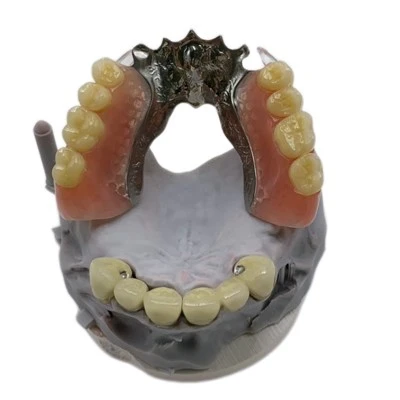
From a market perspective, this release is another major milestone for fully digital removable prosthetics, as overseas clinics show growing interest in integrated one‑piece 3D‑printed dentures. Even with rising adoption of digital printing, however, the market continues to operate on a dual pathway. Many US and European dentists still maintain a strong preference for conventional packed acrylic dentures - the same acrylic flippers and heat‑cured resin bases your lab currently produces. These traditional prostheses remain valued for their proven gingival texture, fracture toughness, ease of chairside repair, relining and incremental tooth addition, especially for elderly patients and community practices.
This parallel demand creates clear segmentation for outsourced dental manufacturing. High‑volume digital‑forward clinics may select the new one‑piece printed workflow for speed and repeatability, while many general practices and prosthodontists will keep ordering conventional hand‑packed acrylic removable prostheses for their established clinical merits. Hybrid workflows, such as Dandy's Fusion series that combine digital bases with manual acrylic packing, sit between these two extremes to serve dentists who want benefits from both worlds.
For OEM dental labs serving North America and Europe, the Dentsply Sirona × HeyGears validation signals two important takeaways. First, one‑piece multi‑material printing is now a commercially supported, validated option to add to digital service menus, for customers prioritizing fast turnaround and fewer manual labour steps. Second, traditional acrylic removable production remains irreplaceable in the near term. Successful offshore labs will maintain capacity across both routes, offering one‑piece printed dentures for digital‑focused clients while preserving skilled acrylic teams to deliver the conventional hand‑packed flippers and partial frameworks that many dentists continue to specify.
The workflow is not without limitations. It is optimized for standard arch forms and predictable cases, and careful digital design review, support structure placement and post‑print curing remain critical to avoid occlusal distortion. Repair protocols for one‑piece printed prostheses also differ from traditional acrylic, which will require clear communication between labs and prescribing dentists on service and remake terms.
In summary, this joint launch expands the upper limit of automation for digital denture fabrication by removing the tooth‑bonding bottleneck. It accelerates high‑volume digital removable production, yet it does not displace conventional acrylic workflows. The coexistence of one‑piece printed dentures and classic hand‑packed acrylic prostheses will remain the core reality for the overseas removable prosthetic market.